Crafting for Relaxation How Arts Crafts Boost Mental Health
Discover the Therapeutic Power of Crafting
In today’s fast-paced world, taking time to unwind is essential for maintaining mental wellness. Structured downtime has never been more critical, and crafting has emerged as a popular creative hobby, offering a unique outlet for self-expression and relaxation. More than just a pastime, engaging in hands-on activities like knitting, painting, or pottery not only fosters creativity but also provides significant therapeutic benefits.
Research indicates that involvement in arts and crafts can reduce symptoms of anxiety and depression, making it an effective tool for improving mental health. This phenomenon is not merely anecdotal; studies have shown that crafting can lead to mindfulness, increased focus, and a sense of achievement. The repetitive motions required in crafting, such as sewing or drawing, can induce a meditative-like state, helping to clear the mind of worry and stress.
The Science Behind Crafting’s Benefits
According to a study published in the American Journal of Public Health, crafting, as a form of art therapy, stimulates the release of dopamine, a neurotransmitter associated with pleasure and reward. This release can help combat the feelings of depression and anxiety, making crafting an excellent addition to one’s self-care routine.
Top Five Crafting Activities to Boost Mental Well-being
In this article, we will explore the top five crafting activities that can enhance your mental well-being. Each of these activities harnesses the calming effects of creativity while offering opportunities for personal growth and exploration.
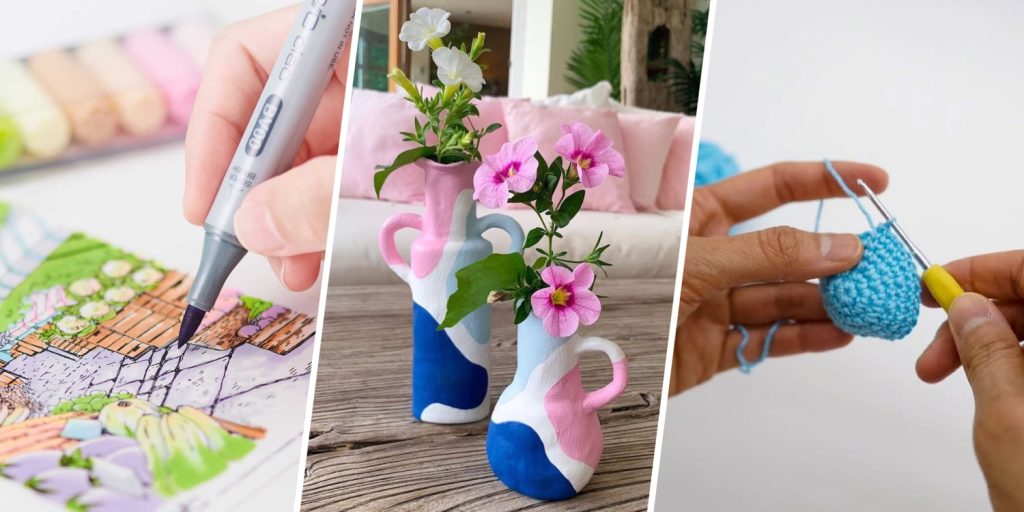
- Knitting or Crocheting: These crafts provide a rhythmic, repetitive motion that is soothing, helping to lower cortisol levels, the body’s stress hormone.
- Painting or Drawing: Expressing emotions through color and form can be profoundly therapeutic, giving a sense of freedom and escape.
- Pottery: The tactile experience of molding clay can be grounding, reconnecting you with the physical world.
- Scrapbooking: Combine creativity with cherished memories, creating a personal storytelling tool that stimulates positive thoughts.
- Jewelry Making: This intricate craft improves fine motor skills and rewards with a tangible, wearable piece of art.
In embracing crafting, you not only derive personal satisfaction from creating something beautiful but also engage in a wholesome activity that nurtures both mind and soul. As we delve further into each of these activities, consider exploring
Top 5 Crafting Activities for Relaxation: How Crafting Can Improve Mental Health
In today’s fast-paced world, where demands are constantly pulling us in various directions, mental health has increasingly become a focal point of discussion. As individuals strive to maintain a balance, there is a growing interest in discovering activities that can alleviate stress and promote relaxation. One such approach, celebrated for centuries, is engaging in crafting activities. Far from being mere pastimes, these creative hobbies offer a myriad of benefits that can profoundly enhance mental well-being and promote a tranquil state of mind. Let’s delve into the top five crafting activities that are not only enjoyable but also significantly contribute to relaxation and mental health:
5. Jewelry Making
Jewelry making is a fascinating blend of art and mindfulness, offering creators a unique way to translate their creative ideas into wearable art. This craft encompasses a wide range of skills, including beading, wire wrapping, and metal smithing, each requiring a meticulous eye for detail and a focused mind.
The act of working with one’s hands engages a person in a form of meditative practice. As you manipulate beads and wires to create intricate designs, you enter a state of flow, where external worries fade and only the immediate task commands your attention. The satisfaction derived from seeing raw materials transform into intricate masterpieces not only enhances self-esteem but also fosters a profound sense of accomplishment.
Moreover, the jewelry pieces you create become tangible symbols of your creative journey, providing a continuous reminder of your personal growth and creative prowess.
- Benefits: Enhances fine motor skills, sharpens focus, and significantly boosts self-esteem.
- Materials Needed: Beads, wires, pliers, a variety of crafting tools, and, optionally, precious metals or stones.
4. Knitting and Crocheting
Knitting and crocheting, traditional crafts enjoying a vibrant revival, are cherished not only for their practical output but for the sense of calm they impart. The repetitive, rhythmic movements involved serve as a soothing balm for the mind, akin to a tactile mantra.
This repetitive motion facilitates a meditative state that can help reduce anxiety and stress. For many, this craft becomes a form of mindfulness practice, where continuous loops and stitches become a metaphor for order amidst chaos.
Groups and forums around these crafts create a sense of community, adding a social dimension to what is often perceived as a solitary activity. These gatherings, either online or in person, provide an opportunity to bond over shared interests, further enhancing the sense of well-being.
- Benefits: Cultivates relaxation, boosts mindfulness, and encourages social interactions through community events.
- Materials Needed: Yarn in various textures and colors, along with needles or hooks appropriate for your project.
3. Painting and Drawing
For centuries, painting and drawing have been revered as powerful forms of self-expression and communication. These crafts offer a sanctuary for personal expression, enabling individuals to convey emotions, thoughts, and dreams in a visual language.
The creative journey from a blank canvas to an expressive piece of art can be deeply cathartic. Individuals find solace and a sense of liberation in the very act of creation, which contributes significantly to improving overall mood and reducing stress.
The beauty of art lies in its subjectivity—there are no rules or limitations, only the freedom to create. This aspect fosters an environment where mistakes are seen as part of the creative process, inviting experimentation and learning.
- Benefits: Facilitates emotional release, nurtures creativity, and enhances cognitive functions by stimulating the brain’s problem-solving processes.
- Materials Needed: Depending on your preference, you may require a selection of canvases, paints, brushes, or drawing supplies like pencils, charcoals, and sketchbooks.
2. DIY Home Decor Projects
DIY home decor projects redefine the concept of ‘home,’ transforming spaces into personalized sanctuaries. These projects are a perfect amalgam of functionality and creativity, allowing individuals to imprint their personality on their living environments.
Engaging in projects such as upcycling old furniture, crafting wall art, or innovating with unique planters encourages resourcefulness and creativity. The detailed planning and execution of each project also hone problem-solving skills, engaging the brain in creative thinking.
Moreover, the sense of accomplishment from completing a project and witnessing your space come alive with personal touches—such as hues you love, textures you admire, and materials you cherish—can greatly enhance self-esteem and living satisfaction.
- Benefits: Fosters problem-solving skills, encourages creativity, and transforms living spaces into personalized retreats that uplift mood.
- Materials Needed: Depends on your specific project, yet frequently includes basic tools, paint, fabrics, and various recycled materials.
1. Scrapbooking
At the pinnacle of our list is scrapbooking, a craft deeply entwined with storytelling and memory preservation. This versatile activity merges creativity with the cherished sentimentality of preserving life’s journey.
Scrapbooking allows individuals to weave photographs, memorabilia, and artistic embellishments into unique narratives. This craft invites reflection, fostering a sense of gratitude for the small moments that weave the fabric of our lives.
The process of assembling a scrapbook can serve as a serene retreat, encouraging introspection and providing mental clarity. Many find that connecting with their past through the visual documentation of memories leads to inner peace and mental rejuvenation. Additionally, sharing these personalized stories with others often enhances connections and deepens relationships.
- Benefits: Cultivates creativity, promotes mindfulness, and provides a reflective haven for memory preservation and personal growth.
- Materials Needed: Albums, decorative paper and embellishments, photos, and adhesives for crafting pages of lifelong memories.
In conclusion, engaging in crafting activities presents an enriching path to nurture mental health and enhance relaxation. These creative outlets encourage self-expression, mindfulness, and community bonding, all of which are vital components in maintaining mental well-being. Whether through working with hands in knitting or expressing emotions via painting, crafting activities offer tools for a balanced, fulfilling life.
| Category | Details |
|---|---|
| Stress Relief | Engaging in crafting can significantly lower stress levels, allowing individuals to focus on creation rather than pressure. Activities like knitting or painting promote a state of flow. |
| Boosting Creativity | Crafting stimulates the brain’s creative centers, fostering innovation and original thought. This can lead to inventive problem-solving in other life areas. |
| Sense of Accomplishment | Completing a project provides a tangible sense of achievement, which can boost self-esteem and combat feelings of inadequacy or depression. |
| Mindfulness | Crafting encourages mindfulness, as individuals become absorbed in the process and materials, which can act as a meditation, grounding them in the present moment. |
Crafting activities serve not just as a pastime but also as a profound therapeutic outlet, embodying a holistic approach to mental health improvement. Engaging in these creative endeavours enables individuals to harness their emotions productively, offering them more than just a creative outlet; it is a sanctuary of calm amid life’s chaos. By integrating crafting into daily routines, individuals can find not only solace but also an exciting way to nurture their minds and spirits. As such, **crafting** is not merely a hobby, but rather a pathway to achieving a well-rounded and emotionally resilient life. This practice has shown promise not only for adults but also for children, who can benefit from the same attributes of creativity and accomplishment, highlighting the necessity for an artistic approach in nurturing future generations’ mental well-being. Embracing crafting can open doors to community involvement, support networks, and shared experiences, enriching lives beyond the individual activity.
Frequently Asked Questions About Crafting Activities for Relaxation
How do crafting activities contribute to mental health improvement?
Crafting activities serve as a form of mindful meditation, allowing individuals to focus on the present moment, which helps reduce stress and anxiety. Engaging in creative processes like knitting, painting, or pottery can stimulate dopamine release, a neurotransmitter linked to pleasure and motivation. This not only boosts mood but also provides a sense of accomplishment and a tangible reward after completing a project.
What are some specific crafting activities recommended for relaxation?
There are numerous crafts known for their relaxing properties. Knitting and crochet facilitate rhythmic and repetitive motion, leading to a calming effect on the mind. Other activities such as scrapbooking, paper crafting, and adult coloring books also promote relaxation by engaging one’s focus and creativity. Each of these activities can help distract from intrusive thoughts and allow for a creative outlet that enhances mental well-being.
Is crafting suitable for individuals experiencing severe mental health challenges?
While crafting can be beneficial, it is not a substitute for professional mental health treatment. For individuals with severe mental health challenges, crafting can be a part of a comprehensive treatment plan, as it offers a way to express emotions safely and can complement therapies such as cognitive behavioral therapy. It’s important to consult with a healthcare professional to tailor activities that suit individual needs and therapeutic goals.
How accessible are crafting activities for beginners, and do they require special skills?
Crafting is highly accessible to beginners as there are a plethora of resources available such as online tutorials, community workshops, and beginner-friendly kits. Most crafting activities do not require advanced skills, and the learning curve is usually gentle. Choosing an activity that aligns with one’s interests can enhance the learning experience and, most importantly, ensure it remains enjoyable, reducing the feeling of being overwhelmed.
Can crafting activities be considered a social activity as well?
Absolutely! Crafting can be both a solitary and a social activity. Crafting communities, both online and offline, offer a platform for individuals to share their work, learn new techniques, and provide mutual support. Group crafting sessions can foster social connections and create opportunities for collaboration and friendship, further enhancing the mental health benefits through increased social engagement.
Conclusion
In a world that often feels overwhelming, engaging in crafting activities emerges as a beacon of tranquility. As explored in the article, crafting offers more than just a creative outlet; it serves as a powerful medium for mental well-being. From knitting to sculpture, each craft brings its unique benefits, allowing individuals to disconnect from the stressors of daily life and reconnect with themselves.
One of the most significant takeaways is the ability of crafting to foster mindfulness and lower stress levels, effectively reducing anxiety. This therapeutic activity not only enhances concentration but also provides a profound sense of accomplishment, contributing to better mental health.
Furthermore, crafting encourages socialization, building communities that offer support and a sense of belonging. These interactions enrich personal relationships and encourage the sharing of experiences, which are crucial elements in improving one’s mental outlook.
The cognitive benefits of crafting also cannot be understated. Engaging in these creative endeavors enhances problem-solving skills and promotes neuroplasticity, ultimately providing a workout for the brain and boosting emotional resilience.
Ultimately, the broad spectrum of benefits that crafting offers suggests that it should not be overlooked as a viable method for improving mental health. With its ability to alleviate symptoms of depression, bolster self-esteem, and bridge connections between people, crafting is not just a hobby, but a meaningful avenue for healing and growth. As more individuals and health practitioners recognize the transformative potential of crafting, its role in promoting mental wellness is bound to gain greater appreciation.